AI in 2025: Regulation, Business Power and the Governance Gap

2025: A Year That Solidified the AI Divide
By the end of 2025, artificial intelligence was no longer framed primarily as a future promise. It had become an operational reality — embedded in enterprise systems, public services, creative industries and geopolitical strategies. What emerged most clearly was not a unified global approach to AI governance, but a landscape marked by regulatory divergence, asymmetric investment power and unresolved questions about accountability.
In Europe, enforcement preparations for the EU AI Act moved forward, introducing bans on so-called “unacceptable risk” systems and new transparency obligations. At the same time, the United States continued to rely largely on executive guidance and sector-specific rules, while Asian economies accelerated infrastructure investment and national AI strategies.
The result is a year that did not deliver global alignment, but instead exposed how deeply artificial intelligence is now intertwined with political power, economic competition and institutional trust.
From Global Frameworks to Fragmented Regulation
Nowhere is this divergence more visible than in regulation. The European Union remains the most ambitious regulatory actor, with the EU AI Act establishing a risk-based framework that includes fines, market bans and mandatory conformity assessments. Legal analysts at the International Center for Law & Economics have noted, however, that implementation will depend heavily on harmonized standards and delegated acts still under development.
This complexity has fueled debate within the EU itself. According to legal briefings from Greenberg Traurig, certain high-risk system obligations may face extended transition periods, with grace periods of up to 36 months before full enforcement — a reminder that even hard law moves slowly when technology advances rapidly.
In the United States, federal policy remains comparatively restrained. Executive orders and voluntary commitments dominate Washington’s approach, as reflected in the evolving American AI policy agenda. Yet this federal caution contrasts sharply with growing state-level assertiveness.
In October 2025, California Governor Gavin Newsom signed SB 53, reinforcing California’s role as a regulatory counterweight within the U.S. itself. The move highlights an emerging internal fragmentation: even as federal authorities seek coherence, individual states are advancing their own AI oversight models.
Outside the West, regulatory momentum is also accelerating. South Korea has advanced its “AI Basic Act,” with implementation timelines that could make certain obligations effective earlier than comparable EU provisions — underscoring how regulatory leadership is no longer confined to Europe.
Models, Agents and Enterprise Adoption
While policymakers debated frameworks, businesses moved decisively. In 2025, the focus shifted from general-purpose experimentation to deployable systems: autonomous agents, verticalized models and AI integrated directly into purchasing, logistics and customer interaction.
Media and industry analysis have highlighted the rise of “agentic commerce,” where conversational systems can execute transactions on behalf of users. At the same time, enterprise AI vendors increasingly framed their offerings around governance, auditability and skills-based architectures.
According to Axios, Anthropic’s introduction of standardized AI “skills” reflects this shift toward controllable, task-bounded AI components — an implicit acknowledgment that unrestricted autonomy remains a risk enterprises are not ready to accept.
Markets, Infrastructure and Geopolitical Power
The economic stakes of AI became unmistakable in 2025. Research firms estimate that the global market for AI trust, risk and governance solutions reached approximately $2.95 billion this year, with sustained growth projections driven by regulatory pressure and enterprise risk concerns.
Meanwhile, infrastructure investment reached unprecedented levels. As reported by the Financial Times, ByteDance plans to invest roughly $23 billion in AI infrastructure in 2026 — a move widely interpreted as part of China’s broader push for computational sovereignty amid U.S. export restrictions on advanced chips.
These investments are not merely commercial. They signal a shift toward AI as strategic infrastructure, comparable to energy grids or telecommunications — and increasingly subject to national security logic.
Governance, Ethics and the Cost of Fragmentation
The absence of a shared global governance framework carries ethical consequences. What is prohibited in one jurisdiction as discriminatory or unsafe may remain legal — and profitable — elsewhere. This is not only a market distortion but a moral hazard.
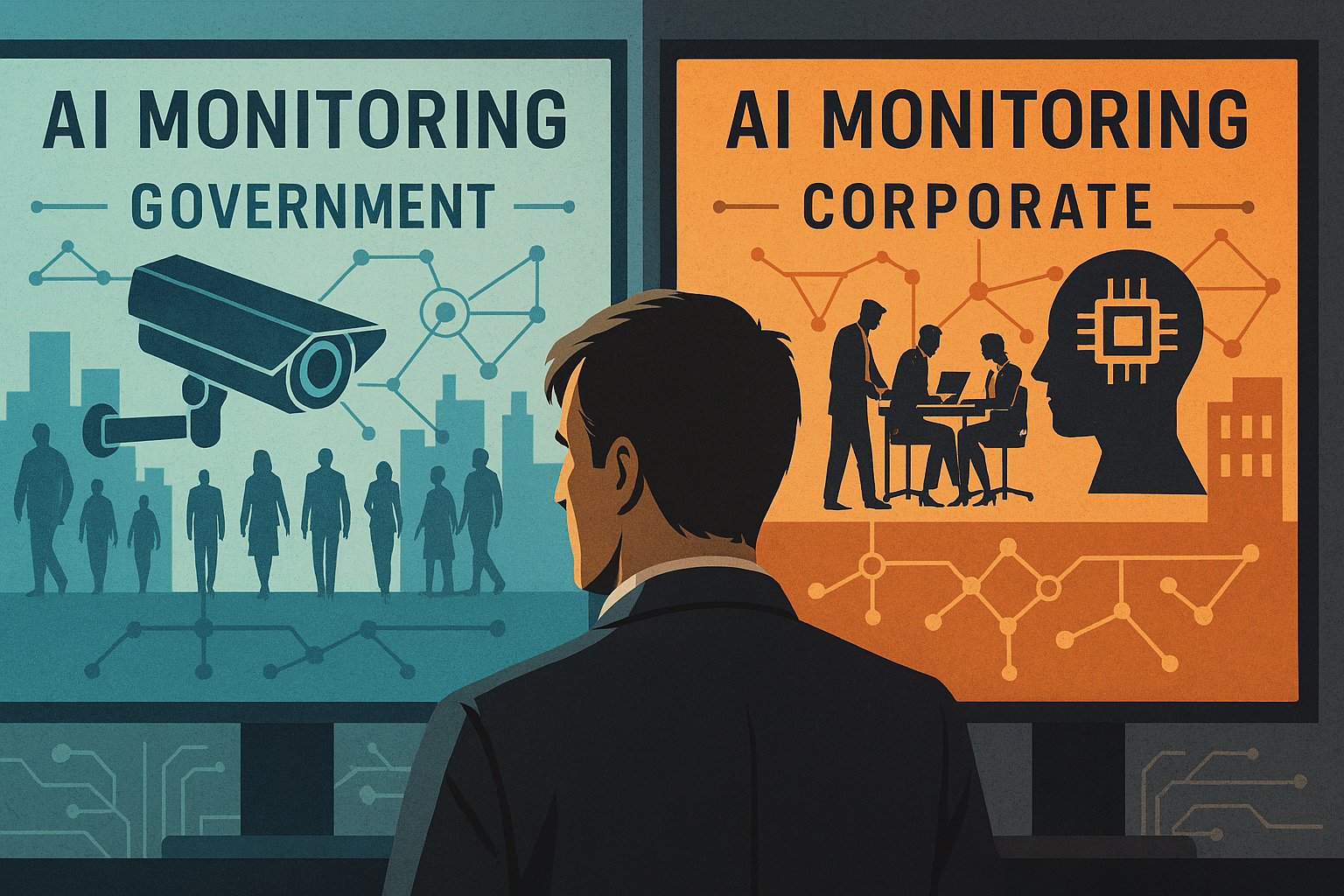
At the core of this governance gap lies a deeper structural divergence. While the European Union approaches artificial intelligence primarily through the lens of civil law — focusing on fundamental rights, market accountability and consumer protection — the United States increasingly frames AI as a matter of national security, strategic competition and critical infrastructure resilience.
This difference is not merely philosophical. It shapes enforcement priorities, regulatory speed and the types of risks policymakers consider legitimate. What Europe treats as a civil harm requiring ex ante safeguards, U.S. institutions often address through defense, intelligence or export-control mechanisms. The absence of a shared legal foundation makes global coordination difficult, even when high-level safety concerns are broadly acknowledged.
Analysts describe this tension as a test of the so-called “Brussels Effect”: whether European standards can meaningfully shape global AI practices in a world where the United States and Asia pursue distinct strategic priorities.
Looking Toward 2026
If 2025 demonstrated anything, it is that artificial intelligence governance has entered a decisive phase. Regulation is no longer hypothetical, investment is no longer tentative, and societal impact is no longer abstract.
Without stronger international coordination, the risk is not only regulatory fragmentation, but a future in which AI systems reinforce economic inequality, political control and institutional opacity. The challenge for 2026 will not be accelerating AI — that momentum is already unstoppable — but ensuring that power, accountability and human oversight scale alongside it.